We Don't Know How to Grieve Anymore — But These Ancient Rituals Do
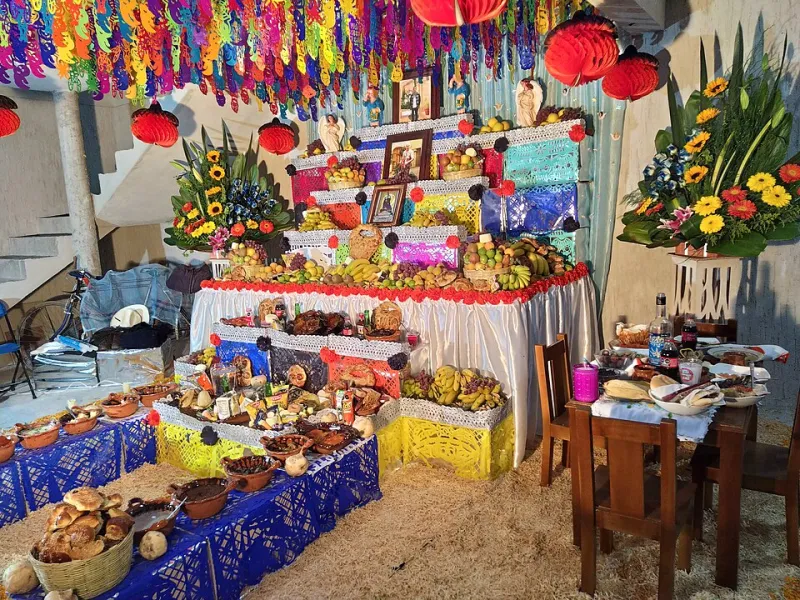
Photo: AlexgarcesM, CC BY-SA 4.0, via Wikimedia Commons
The Grief We Never Finished
Most of us are carrying losses we never fully processed. Not because we're broken or emotionally avoidant — but because no one gave us a container for them. American culture is famously uncomfortable with grief. We rush through it, pathologize it when it lingers, and quietly communicate to people that the mourning period should wrap up before it inconveniences anyone.
The result is what some grief researchers call "grief that got stuck" — loss that lives in the body, resurfacing as anxiety, numbness, or a low-grade sadness that never quite has a name.
Here's what's striking: for most of human history, in most cultures, this wasn't how it worked. Communities didn't just acknowledge loss — they structured it. They built rituals around it. They gave mourners a script, a timeline, and a role. And increasingly, the psychological research suggests those old frameworks were doing something profound that our modern, individualized approach to grief simply doesn't replicate.
What Ritual Actually Does to a Grieving Brain
A 2014 study published in Psychological Science found that people who performed rituals after a loss — even simple, self-created ones — experienced significantly less grief than those who didn't, and felt more in control during an inherently uncontrollable experience. The researchers noted that the intentionality of ritual seemed to be the active ingredient: it signals to the brain that this moment matters, that the loss is real and worth marking.
Grief, neurologically speaking, is partly a problem of disrupted prediction. Your nervous system had built an entire model of the world that included the person or thing you lost — and now those predictions keep firing into absence. Ritual doesn't fix that. But it gives the nervous system something structured to do with the disorientation. It creates a container.
This is something traditional cultures understood in practice long before neuroscience had language for it.
Kuyou: The Japanese Art of Honoring What Is Lost
In Japan, kuyou ceremonies are performed for everything from deceased relatives to broken sewing needles. No, really — there are annual ceremonies at Shinto shrines where tailors bring worn-out needles to be retired with gratitude and prayer. The underlying philosophy is that objects and relationships that have served us deserve acknowledgment when they leave our lives.
For humans, kuyou takes more elaborate forms. The obon festival, observed each August, is a three-day period when the spirits of ancestors are believed to return to visit. Families light lanterns, clean graves, and prepare food offerings. The ritual isn't morbid — it's intimate. It treats the deceased as ongoing presences in the lives of the living, rather than absences to be managed.
For Americans grappling with loss, the kuyou framework offers something genuinely useful: permission to grieve things that our culture doesn't officially sanction as worth grieving. The end of a friendship. A miscarriage. A job that held your identity. A version of yourself you had to let go of. If it mattered, it deserves a ritual.
Día de los Muertos: When Grief Becomes Celebration
The Mexican tradition of Día de los Muertos, observed November 1–2, is probably the most widely recognized grief ritual in the US — and also one of the most misunderstood. It's not a morbid holiday or a Mexican Halloween. It's a sophisticated, multi-layered practice of maintaining relationship with the dead.
Families build ofrendas — altars — decorated with marigolds, photographs, favorite foods, and personal objects of the deceased. The belief is that the dead can return during this window, drawn by the scent of the flowers and the warmth of being remembered. Grief is present, but so is joy, humor, and genuine connection.
What this tradition models is something grief therapists now actively advocate for: continuing bonds theory, which challenges the older clinical idea that healthy grieving means detaching from the deceased. Research increasingly supports the idea that maintaining a symbolic or spiritual relationship with those we've lost — talking to them, honoring them, including them in celebrations — is not a failure to move on. It's a healthy adaptation.
You don't need to be Mexican or Catholic to take inspiration from this. Building a small altar with a photograph and a meaningful object during a loss anniversary is accessible to anyone, and the psychological effect — the deliberate act of turning toward rather than away from grief — is real.
Celtic Wake Traditions: Grief as Community Act
The Irish and Scottish wake tradition is one of the most communally robust grief rituals in the Western world. Historically, the body of the deceased would remain at home for several days, surrounded by family, neighbors, food, music, and storytelling. People would travel significant distances to sit with the family — not to say anything useful, but simply to be present.
The function of this isn't mysterious. Grief is isolating by nature; it makes us feel fundamentally alone in our loss. The traditional wake was a direct counter to that isolation. It said: you are not alone in this, and your loss is witnessed by your community.
Modern American funeral culture has largely moved toward efficiency — a brief service, a reception, and then a fairly rapid dispersal back to normal life. Many people report feeling the loneliest in the weeks after the formal services end, when the casseroles stop coming and everyone goes back to work. The Celtic tradition, with its extended communal mourning period, was actually addressing a real psychological need.
Building Your Own Grief Ritual
You don't have to adopt another culture's tradition wholesale to benefit from the wisdom embedded in these practices. What matters is intentionality, repetition, and meaning. Here's a framework for building something that's genuinely yours:
1. Choose a container. Grief needs a beginning and an end — at least for each session. Light a candle to open the ritual space and blow it out to close it. This simple act signals to your nervous system that you're entering and exiting intentional grief work.
2. Make it sensory. The most effective grief rituals across cultures involve the body: scent, sound, touch, movement. Hold an object that belonged to the person you lost. Play music they loved. Prepare a food they made. Sensory memory is one of the most direct pathways to grief — and working through it deliberately is very different from being ambushed by it.
3. Speak the loss out loud. Whether to another person, to a journal, or simply to the air in front of you — name what you lost and why it mattered. This is what the kuyou ceremony does, what the ofrenda does, what the wake storytelling does. It makes the loss real and witnessed.
4. Mark anniversaries. Grief doesn't follow a linear timeline, and it doesn't end. Creating an annual ritual around a loss — even something small — gives you a structured place to return to it, rather than being caught off guard every time the date rolls around.
5. Include others when you can. Grief is not meant to be a solo sport. Even if it's just one trusted person sitting with you while you look at photographs, the communal witness changes the experience.
You Don't Have to Be "Over It"
One of the most damaging myths in modern American grief culture is that healing means reaching a point where the loss no longer hurts. Ancient traditions offer a different model: grief doesn't end, it integrates. The people and things we've lost become part of us — woven into how we move through the world.
That's not failure. That's love with nowhere left to go, finding a new form.
Give it a ritual. Give it a container. And give yourself the grace to take as long as you actually need.