Silence Isn't Empty — It's the Medicine We Keep Muting
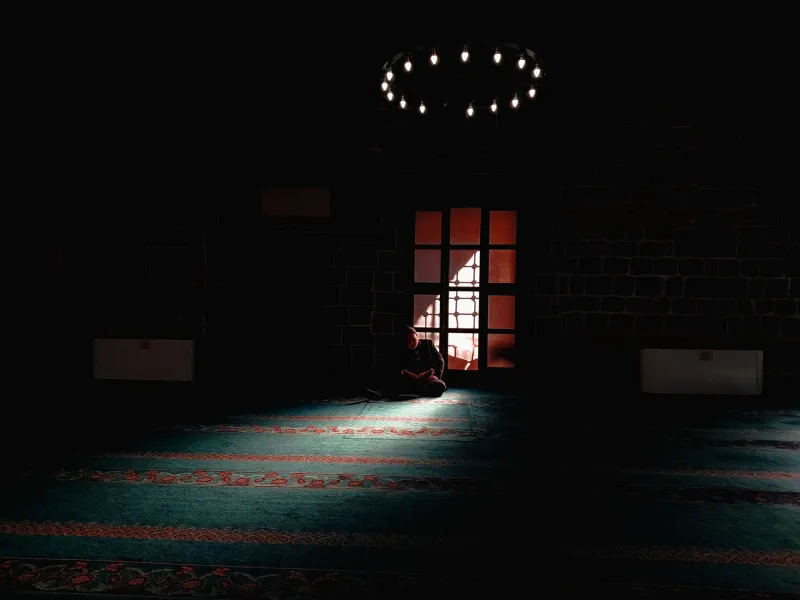
There's a particular irony in the way we've sold meditation to ourselves. We download the app, plug in the earbuds, and listen to a soothing voice tell us to let go of thought — while our phone buzzes on the nightstand and a lo-fi playlist loops underneath. We call this stillness. Ancient traditions would call it something else entirely.
True silence — the kind practiced in Zen monasteries, Quaker meetinghouses, Vipassana retreat centers, and the desert caves of early Christian mystics — was never about blocking out distraction with better distraction. It was about arriving at something. A threshold. The kind of quiet that doesn't just calm your nervous system but fundamentally reorganizes how you relate to your own interior life.
We've drifted a long way from that.
What the Wisdom Traditions Actually Understood
Across cultures and centuries, silence wasn't passive. It was a technology.
The Desert Fathers and Mothers of 3rd-century Egypt didn't retreat into the Sinai wilderness because they lacked podcasts. They understood that the relentless stream of external input — conversation, noise, social obligation — kept the mind skimming the surface of itself. Depth required stillness. What they called hesychia — inner quietude — was considered the very ground from which genuine spiritual perception could emerge.
In the Zen tradition, the practice of mokusho (silent illumination) predates any app by about a thousand years. Monks sat in extended silence not to relax, but to encounter themselves without the buffer of words. Similarly, in the Quaker tradition, communal worship happens almost entirely in silence — not as a backdrop, but as the actual practice. The silence is the service.
Indigenous traditions across North America have long used vision quests — days of solitary, silent time in nature — as initiatory experiences. The silence wasn't incidental. It was the mechanism by which transformation happened.
The common thread? These traditions treated silence as a generative force, not an absence. Something you enter, not something you endure.
What Neuroscience Is Starting to Catch Up To
For a while, science didn't have much to say about silence itself. Then researchers started paying attention to what happens in the brain when external stimulation stops — really stops.
A 2013 study published in Brain Structure and Function found that two hours of silence per day prompted the development of new cells in the hippocampus, the region of the brain associated with memory and emotional regulation. The researchers had initially used silence as a control condition. The silence turned out to be the most interesting finding.
Separate research has shown that the default mode network — the brain's internal processing system, associated with self-reflection, empathy, and meaning-making — becomes more robustly active in genuine quiet than during passive consumption of audio or visual media. In other words, your brain does some of its most sophisticated work when you stop feeding it content.
This is the neurological argument for what mystics have known intuitively: silence is not the absence of something. It's the presence of something else.
Where Modern Meditation Went Sideways
None of this is an attack on guided meditation — for beginners especially, structure and gentle prompting can be genuinely useful entry points. But somewhere along the way, the wellness industry made a quiet swap. It replaced the destination (actual silence, actual stillness) with a more comfortable simulation of it.
Meditation apps now generate hundreds of millions of dollars annually in the US. Many of them are excellent at reducing acute anxiety. Fewer of them are designed to bring you into the kind of sustained, unmediated quiet that rewires anything fundamental.
The problem isn't the tools. It's the assumption embedded in them — that silence is too uncomfortable to be approached directly, that we always need something between ourselves and the quiet. That assumption, ironically, perpetuates the exact restlessness these practices are meant to dissolve.
If you've been meditating with apps for years and still feel fundamentally fragmented, this might be why.
Rituals for Reclaiming Real Silence
You don't need a monastery. You need intention and a little inconvenience — because genuine silence does require some friction in a world optimized for constant input.
The Digital Sabbath Window Choose one hour per week — ideally the same hour each week — where all screens are off, notifications are silenced, and you do one simple analog task: make tea, fold laundry, sit by a window. No music. No podcast. The repetition of a chosen time matters; it trains your nervous system to expect the transition into quiet, making the drop-in faster over time.
The Silent Meal This one comes directly from monastic tradition. Eat one meal per week in complete silence. No phone, no TV, no reading material. Just the food, the act of eating, and whatever arises in the space between bites. It's uncomfortable at first. That discomfort is the practice. Monasteries often paired silent meals with designated reading — you can try that too — but the absence of conversation alone changes the quality of attention dramatically.
The Morning Silence Threshold Before you speak your first word of the day, before you check your phone, before the news cycle floods in — sit in silence for five minutes. This isn't meditation in any formal sense. It's simply refusing to let external input be the first thing that shapes your day. Many contemplative traditions built entire morning practices around this principle. You're just reclaiming the version that fits your life.
Nature Immersion Without Soundtrack Next time you go for a walk, leave the earbuds out. All the way out. Let the ambient sound of the world — birds, traffic, wind, your own footsteps — be what it is. Notice how quickly the mind reaches for stimulation, and notice what happens when you don't give it any. This is a practice in itself.
The Five-Minute Sit Set a timer for five minutes. Sit comfortably. Close your eyes. Make no effort to meditate, visualize, breathe in any particular pattern, or achieve anything. Just sit in silence and let whatever happens, happen. Do this daily for two weeks before you evaluate it. Most people find the discomfort peaks around day four and begins to shift around day ten.
The Silence That's Waiting for You
Here's what the traditions all agree on, and what the neuroscience is beginning to map: there is a layer of yourself that you cannot access through noise. Not through beautiful noise, not through healing frequencies, not through the most thoughtfully curated guided journey. That layer only surfaces in genuine quiet.
You don't have to believe anything mystical to find this useful. You just have to be willing to sit with yourself, unmediated, long enough to find out what's actually there.
The silence isn't empty. It never was. It's just been waiting for you to stop filling it.