The Touch Famine Nobody's Talking About — And the Ancient Healing Hands That Can End It
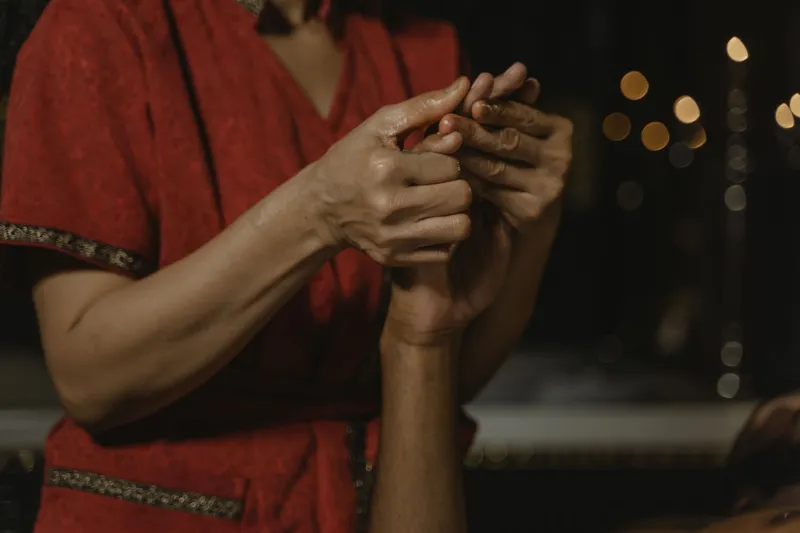
Somewhere along the way, we got weird about hands.
Not all cultures. Not all at once. But in the contemporary United States, a slow, invisible wall went up around physical contact that wasn't romantic, wasn't sexual, and wasn't transactional. We shake hands in boardrooms. We hug at funerals — briefly, awkwardly. We tip our massage therapist and schedule the next appointment three weeks out. What we almost never do anymore is just touch each other — casually, healingly, as a matter of course.
And that absence is costing us more than we realize.
What Skin Hunger Actually Does to a Body
Researchers have a clinical term for the condition of being chronically under-touched: tactile deprivation. But the folk term — skin hunger — gets at something the clinical language misses. It's a craving. A physiological ache.
When meaningful touch happens, the body releases a cascade of neurochemicals: oxytocin (the bonding hormone), serotonin, and dopamine all spike. Cortisol — your primary stress hormone — drops. Heart rate slows. The vagus nerve, that long wandering nerve running from brainstem to gut that governs your entire parasympathetic nervous system, gets activated in ways that literally calm inflammation.
When that touch doesn't happen? The opposite unfolds. Chronic touch deprivation is linked to higher rates of anxiety, depression, compromised immune function, and even increased pain sensitivity. A 2020 study out of Germany found that social touch deprivation during COVID lockdowns significantly elevated psychological distress — even after controlling for social isolation from conversation and video calls.
Your skin isn't just a barrier. It's a receiver. And most of us have it set to airplane mode.
The Healing Hand Traditions We Quietly Abandoned
Here's what's striking: virtually every ancient healing tradition on earth built intentional touch into its medicine. This wasn't incidental. It was central.
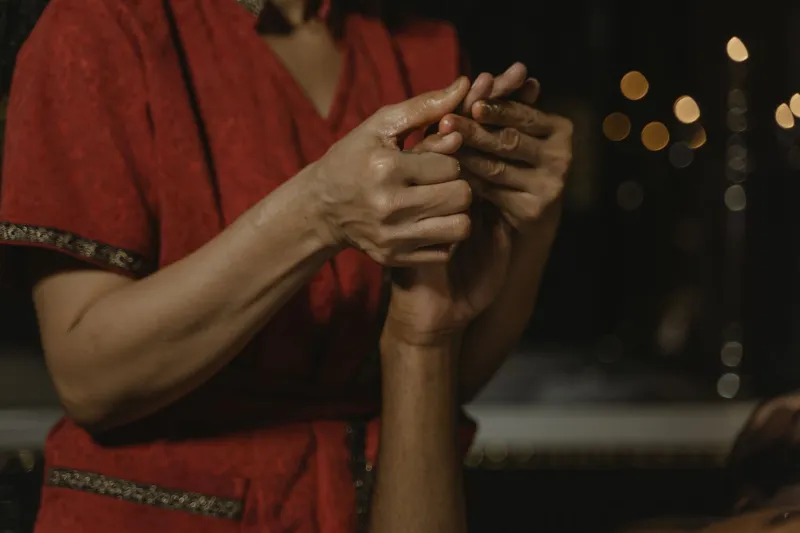
Shiatsu and the Japanese art of pressure — Rooted in traditional Chinese medicine but developed distinctly in Japan over centuries, shiatsu (literally "finger pressure") operates on the understanding that the body's vital energy, or qi, flows through specific meridian pathways. A skilled practitioner's thumbs and palms aren't just providing comfort — they're communicating with the nervous system through precise pressure points, releasing blockages that manifest as physical or emotional symptoms. Modern research into shiatsu has found measurable reductions in anxiety, headache frequency, and musculoskeletal pain. The hands, in this tradition, are diagnostic instruments and treatment tools simultaneously.
West African massage lineages — Across many West and Central African cultures, therapeutic bodywork has been practiced for generations not just as personal care but as communal medicine. In Ghanaian traditions, postpartum massage — practiced by experienced elder women — was considered as essential as any herbal remedy for a new mother's recovery. These weren't spa treatments. They were rituals of cellular repair, of returning a woman's body to itself after the profound upheaval of birth. Griots and healers carried knowledge of pressure, heat, and plant-infused oils that addressed everything from joint pain to grief. Much of this knowledge was disrupted by colonization and the transatlantic slave trade — a loss of healing intelligence that rarely gets named as such.
European herbalist hand-work — Before the professionalization of medicine pushed women healers to the margins, the village herbalist or "wise woman" of medieval and early modern Europe was as likely to lay hands as to dispense tinctures. Techniques of effleurage (long, sweeping strokes), kneading, and friction weren't invented by nineteenth-century Swedish physiologists — they were systematized by them, after centuries of folk practice. The hands of a healer were understood to carry something beyond technique: intention, warmth, care. That wasn't mysticism. That was an early intuition about what we now know as the bioelectric and thermal signals skin-to-skin contact actually transmits.
Why We Stopped — And Who Benefited
The medicalization of touch didn't happen by accident. As Western medicine consolidated authority in the 19th and 20th centuries, any healing modality that couldn't be standardized, measured, or monetized through professional licensing got systematically delegitimized. Touch became the province of licensed practitioners in clinical settings — which meant it became something you paid for, on a schedule, in a room with a table and a paper sheet.
That's not nothing. Professional bodywork is genuinely valuable. But when healing touch becomes exclusively a service transaction, something essential gets lost. The spontaneous, relational, communal dimension — the neighbor who rubs your shoulders when you're clearly holding tension, the grandmother who knows exactly how to hold a sick child — that gets categorized as unprofessional, or worse, inappropriate.
We're left with a culture that's deeply ambivalent about physical contact, and a population that's measurably suffering for it.
Reclaiming Touch Without a Waiting Room
You don't need a certification to start undoing this. You need intention and consent — which, honestly, are the same things every ancient healing tradition required.
Start with yourself. Self-massage is legitimate medicine. Ayurvedic abhyanga — the practice of massaging warm oil into your own body before bathing — is one of the oldest self-care rituals on record, and it works. Use sesame or coconut oil, warm it slightly, and spend ten minutes before your morning shower moving from your feet upward toward your heart. This isn't indulgence. It's nervous system regulation.
Revive the casual touch in your relationships. This takes a conversation, especially in adult friendships where touch has become awkward. But a simple "is it okay if I rub your shoulders for a minute?" can crack open something that's been sealed for years. Platonic touch between friends is normal in most of the world. We made it strange. We can unmake that.
Learn one pressure point. The hegu point — located in the webbing between your thumb and index finger — has been used in Chinese medicine for thousands of years to relieve headaches, reduce stress, and ease tension. Firm, circular pressure for 30 to 60 seconds on each hand. Do it on yourself. Do it for someone you love who has a headache. Feel what happens.
Create a touch ritual. Whether that's a weekly exchange of foot rubs with a partner, a monthly self-massage practice, or a commitment to greeting close friends with a real embrace rather than a side-hug-and-release — make it intentional. Named practices carry more weight than unconscious ones. That's something every ritual tradition has always understood.
Your Hands Already Know What to Do
There's something that happens when you place your palm flat against someone's back — or against your own chest, for that matter — and just let it rest there. The body responds. Breathing deepens. The nervous system exhales.
That response isn't learned. It's ancient. It's written into the biology of a species that evolved in physical contact with each other, that grew up being carried and held and tended by hands that knew what they were doing.
The traditions that built medicine around touch weren't primitive. They were paying attention to something we've been carefully trained to ignore.
Your hands are holding centuries of forgotten medicine. Time to remember how to use them.