The Ritual Your Skin Has Been Begging For: How Ancient Anointing Practices Reconnect You to Your Most Ignored Organ
Let's be real: most of us treat our skin like drywall. Slap something on it, hope it holds, move on. We're a culture obsessed with skincare products — the average American woman uses somewhere between nine and fifteen personal care products before she even leaves the house — and yet we've never been more disconnected from what our skin is actually trying to tell us.
Here's the thing. Your skin is the largest organ in your body. It's riddled with nerve endings, home to a complex microbiome, and in constant two-way communication with your nervous system and immune response. It notices everything. And for thousands of years, healers across wildly different cultures understood this intuitively. They didn't just moisturize. They anointed. And the difference between those two things is enormous.
What Anointing Actually Means — And Why It's Not What You Think
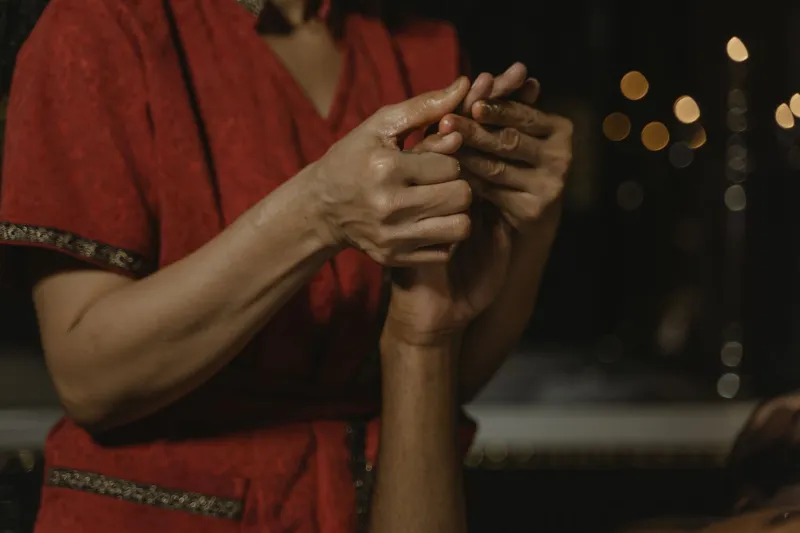
The word "anointing" tends to conjure images of religious ceremony — kings being crowned, priests in robes. But strip away the formality and you find something much more universal: the intentional, slow, mindful application of oil to the body as an act of care, connection, and communication.
In ancient Egypt, aromatic oils weren't luxury items — they were medicine and ritual in one. In Ayurvedic tradition, the practice of abhyanga (self-massage with warm oil) is described in texts over 5,000 years old as a daily practice that nourishes the body, calms the mind, and builds what practitioners call ojas — a kind of deep vitality that modern science might loosely translate as immune and nervous system resilience. In West African traditions, shea butter and palm oil were applied with intention and touch in ways that marked transitions, celebrated the body, and maintained both physical and spiritual health.
The throughline? In every one of these traditions, the application of oil was slow. It was deliberate. And it was never just about the skin's surface.
What's Happening in Your Body When You Do This Right
Modern neuroscience has started catching up to what traditional healers knew by feel. When you apply slow, sustained pressure to the skin — the kind that happens in genuine self-massage — you activate what researchers call C-tactile afferent fibers, a specific class of nerve endings that respond almost exclusively to gentle, intentional touch. These fibers don't just register sensation. They trigger a measurable drop in cortisol, an uptick in oxytocin, and a shift in the autonomic nervous system toward parasympathetic dominance — which is the "rest and digest" state that most of us are desperately under-resourced in.
Translation: slow oiling literally signals safety to your nervous system in a way that a fast lotion application simply doesn't.
And then there's your skin microbiome — the community of bacteria, fungi, and other microorganisms living on your skin's surface. Research is still young here, but what we know is that the skin microbiome is sensitive to both what you put on it and how you engage with it. Harsh, stripping cleansers disrupt it. Chronic stress disrupts it. But plant-based oils — particularly traditional ones like sesame, jojoba, coconut, and marula — appear to support microbial diversity rather than nuke it, especially when applied consistently and gently.
The Problem With How We've Been Doing Skincare
American skincare culture has a speed problem. We're conditioned to think of body care as something to rush through — a functional task to complete between the shower and getting dressed. The ritual dimension has been completely evacuated. We've outsourced the why to dermatologists and the what to marketing budgets, and in doing so, we've lost the most important part: the actual conversation between our hands and our skin.
When you apply lotion in thirty seconds while mentally drafting your to-do list, your nervous system doesn't register it as care. Your skin microbiome doesn't benefit from the touch component. And you miss every signal your skin is trying to send you — the tightness in your shoulders, the tension you're holding in your jaw, the patch on your inner arm that's been irritated for weeks because you're running on empty.
Ancient anointing traditions treated the body as a text worth reading. Modern skincare largely treats it as a surface worth managing.
How to Actually Bring This Practice Into Your Life
You don't need a temple, a ceremony, or a $90 bottle of facial oil to start. Here's what the practice actually looks like in a real American morning or evening:
Choose your oil with intention. Sesame oil is the classic Ayurvedic choice for its warming, grounding properties. Jojoba works beautifully for most skin types and has a profile remarkably similar to the skin's own sebum. Marula oil, rooted in southern African tradition, is rich in oleic acid and absorbs quickly. Pick one that resonates and stick with it long enough to actually notice something.
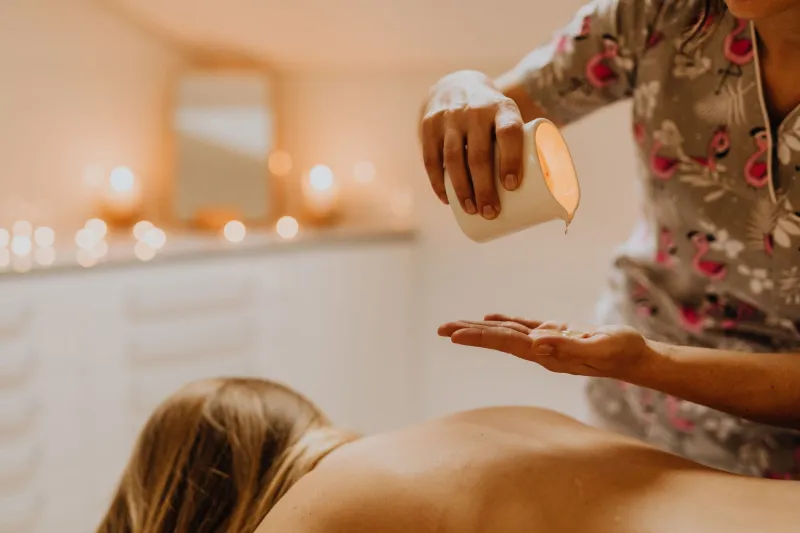
Warm it. This is non-negotiable in abhyanga tradition, and there's good reason for it — warm oil absorbs more readily and the sensation itself is profoundly calming. A few seconds in your palms, or a small bottle briefly placed in warm water, is enough.
Slow down to an almost uncomfortable degree. Start at your feet and work upward. Use long strokes on limbs, circular strokes on joints. The Ayurvedic instruction is to give yourself the kind of touch you'd give someone you love. That's the standard.
Stay off your phone. This is the ritual part. Five to ten minutes of genuine presence — no podcast, no mental multitasking — is what separates anointing from moisturizing. Your nervous system needs the undivided signal.
Notice what you notice. Where are you holding tension? Where does touch feel good versus where do you flinch away from it? Your skin has information. The practice is partly about learning to receive it.
The Deeper Invitation
There's something quietly radical about treating your own body as worthy of slow, deliberate attention. In a culture that commodifies self-care while simultaneously making it impossible to actually rest, reclaiming an ancient anointing practice is a small act of resistance.
Your skin has been doing its job faithfully for your entire life — regulating temperature, fighting pathogens, translating the physical world into sensation, holding you together quite literally. Ancient traditions honored that. They built daily rituals around it.
You don't have to believe in ojas or ancestral medicine to benefit from this. You just have to slow down enough to show up for the conversation your skin has been trying to have with you all along.
Start tonight. One oil. Ten minutes. No agenda. See what your body says when you finally give it the floor.